
Alamance County Dissolution Of Marriage Records
Alamance County dissolution of marriage records are held by the Clerk of Superior Court in Graham. The county sits in the central Piedmont region of North Carolina between Burlington and Chapel Hill. Anyone can search these records to find case details, judgments, and filings. The clerk keeps divorce case files going back to 1832. Whether you need a copy of a final judgment or want to confirm a divorce took place, the Alamance County courthouse is where these records live. Both in-person and mail requests are accepted.
Alamance County Quick Facts
Alamance County Clerk of Superior Court
The Clerk of Superior Court is the main office for dissolution of marriage records in Alamance County. This office stores all civil court files, including divorce complaints, judgments, and any agreements filed with the court. Staff can search records by name or case number and provide copies of documents on request. The courthouse is in Graham, which is the county seat of Alamance County.
Alamance County was created on January 29, 1849, from Orange County. It was named for the Battle of Alamance, the final battle of the War of the Regulation in 1771. Court records in Alamance County reach back to 1832, before the county was formally established, because some records carry over from Orange County proceedings. The clerk's office serves all cities and towns in Alamance County, including Burlington, Graham, Mebane, Elon, and Gibsonville. All dissolution of marriage cases for residents of Alamance County are filed at this one location.
The Alamance County NCGenWeb site offers background on local court records and historical resources for researchers tracing family history in the county.
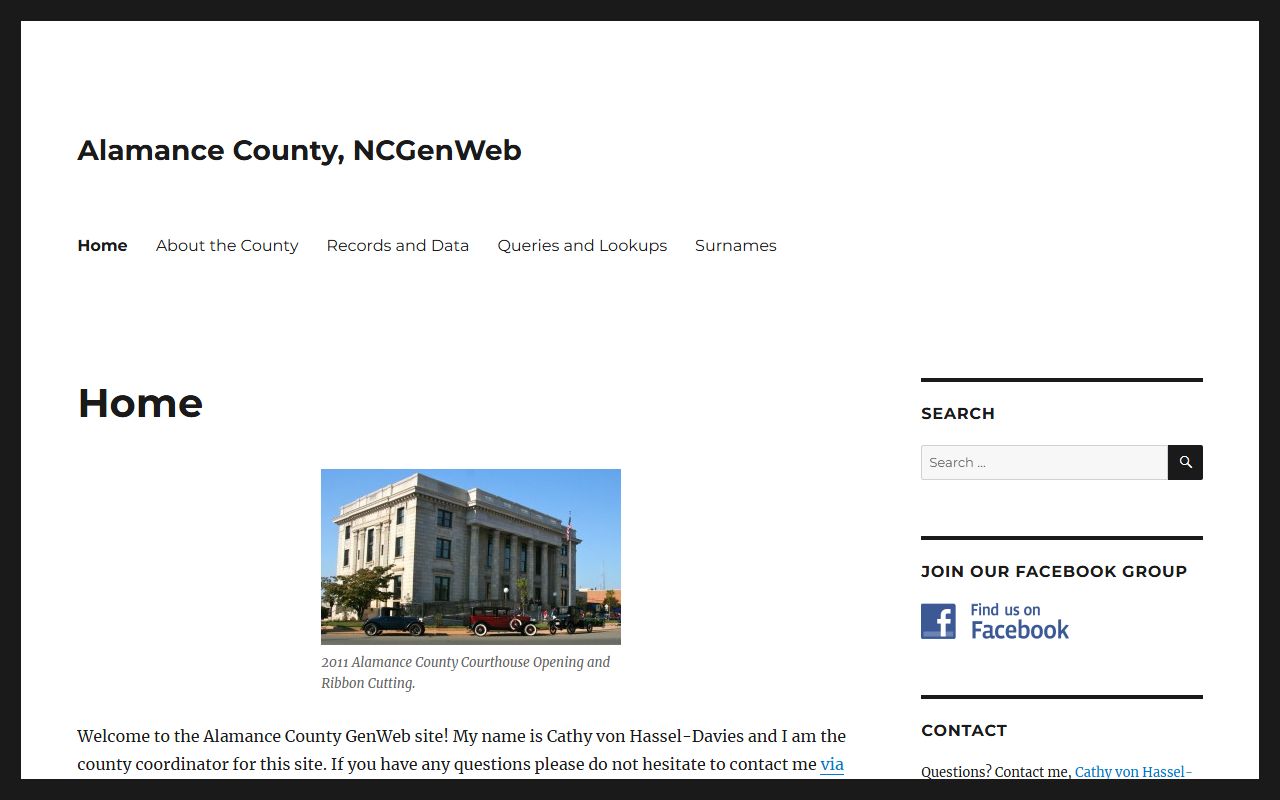
This resource includes guides for accessing older Alamance County court records and links to genealogy collections that may help locate early divorce proceedings.
| Court |
Alamance County Clerk of Superior Court 212 W Elm St Graham, NC 27253 Phone: (336) 570-5200 |
|---|---|
| Hours | Monday through Friday, 8:30 AM to 5:00 PM |
| Register of Deeds |
109 S Maple St, Graham, NC 27253 Phone: (336) 570-6565 Marriage records from 1851 |
How to Find Alamance County Divorce Records
You have two main ways to search dissolution of marriage records in Alamance County. You can visit the clerk's office in person or send a written request by mail. In-person visits give you the fastest result. You can review the file directly and request copies on the spot. Mail requests take longer but work well if you live outside the county.
The North Carolina court system provides online case lookups through the NC Courts website. This gives you basic case information such as the party names, filing date, and case status. For the full file with all documents, you still need to contact the Alamance County clerk. The online tool is a good first step to confirm that a case exists and get the case number before making your request.
When you contact the Alamance County clerk, have these details ready: the full name of at least one spouse, the approximate year the divorce was filed, and the case number if you have it. Older records from the 1800s may take more time to locate. The clerk's staff is familiar with older Alamance County filings and can guide you through the search process.
Note: The Family History Library has microfilm copies of Alamance County divorce records that researchers can access through local FamilySearch Centers for older cases.
Dissolution Of Marriage Filings in Alamance County
Filing for dissolution of marriage in Alamance County follows the rules set by North Carolina law. Under North Carolina law, you must have lived in the state for at least six months before filing. You also need to have been living apart from your spouse for at least one year. Alamance County residents file their divorce complaint at the Clerk of Superior Court in Graham. The filing fee is $225 for a new complaint.
Once you file, the clerk assigns a case number and the file becomes a public record. The complaint, any responses from the other party, and the final judgment are all stored in the case file. The judgment of dissolution of marriage is the document that ends the marriage. Certified copies of this judgment are often needed for legal purposes such as name changes or property transfers. You can get certified copies from the Alamance County clerk's office.
Alamance County Dissolution Of Marriage Certificates
North Carolina Vital Records keeps divorce certificates from 1958 to the present. If you need to verify a dissolution of marriage that took place in Alamance County after 1958, you can request a certificate from NC Vital Records. The certificate shows the names of both parties, the date of the divorce, and the county where it was granted. It does not include the full terms of any settlement or custody arrangement.
The fee for a divorce certificate from NC Vital Records is $24 for a standard search covering a three-year period. That fee includes one copy if a record is found. Processing times can run more than 100 business days due to high demand. If you need the record faster, contact the Alamance County clerk directly for a copy of the court judgment. For divorces that happened before 1958, the clerk in Graham is your only source, as the state office does not hold pre-1958 records.
Note: For the full divorce judgment with all terms and conditions, you must go to the Alamance County Clerk of Superior Court rather than the state vital records office.
Historical Dissolution Of Marriage Records in Alamance County
Alamance County has a strong record of preserved court documents. The county was carved from Orange County in 1849, and court records go back to 1832. This means some of the oldest dissolution of marriage records in the Piedmont region can be found through Alamance County sources. The Register of Deeds holds marriage records from 1851 and land records from 1849, both of which often connect to divorce proceedings.
The FamilySearch North Carolina Divorce Records guide explains how to find older court records in the state. Before 1868, many North Carolina divorces were granted by special acts of the General Assembly rather than by courts. Researchers looking for very early Alamance County dissolution of marriage records may need to check the North Carolina State Archives, which has microfilm of court records from many counties including this one.
The Alamance County Register of Deeds at 109 S Maple St in Graham can help with marriage certificates and property records that often come up during divorce proceedings. Their records reach back further than the county's own founding because some Orange County materials transferred over.
Nearby Counties
These counties border Alamance County. If you are unsure which county has your dissolution of marriage case, check the address where you lived when the divorce was filed. You must file in the county where either spouse lives.