
Greene County Dissolution Of Marriage Records
Greene County dissolution of marriage records are kept by the Clerk of Superior Court in Snow Hill. This small eastern North Carolina county has maintained court and marriage records since 1800. Anyone who needs to search for a divorce case filed in Greene County can contact the clerk's office directly or use the North Carolina courts online portal. The clerk handles all dissolution of marriage filings and can provide certified copies of final judgments to those who make a request.
Greene County Quick Facts
Greene County Clerk of Superior Court
The Clerk of Superior Court in Snow Hill is the official records custodian for all dissolution of marriage cases in Greene County. This office handles filings, maintains court files, and issues copies of documents to those who request them. Staff can look up cases by party name or case number. To get records, you can call the clerk's office, visit in person, or submit a written request.
Greene County was created on November 14, 1799, from Dobbs County. It was originally named Glasgow County but was renamed in 1799 for General Nathanael Greene, a hero of the American Revolutionary War. The county seat is Snow Hill, a quiet town in the coastal plain region of eastern North Carolina. Court, marriage, and land records in Greene County go back to 1800. The county has a small population and a rural character, but its courthouse in Snow Hill serves all residents with the same civil court services available throughout North Carolina, including dissolution of marriage filings.
Current contact details and courthouse hours are listed on the Greene County Court Information page maintained by the NC Judicial Branch.
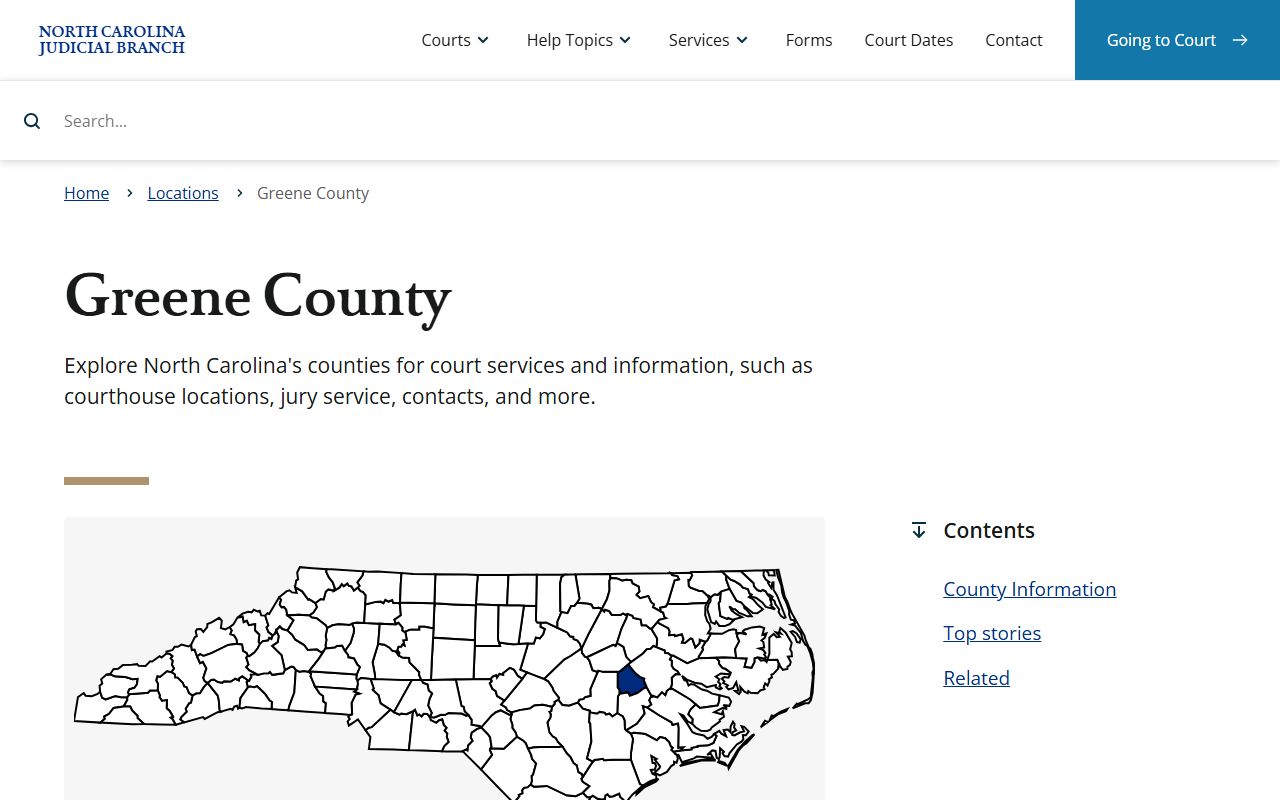
The page above, published by the NC courts system, shows the current contact information and location for the Greene County Clerk of Superior Court in Snow Hill.
| Court |
Greene County Clerk of Superior Court PO Box 675 Snow Hill, NC 28580 Phone: (252) 747-3505 |
|---|---|
| Hours | Monday through Friday, 8:00 AM to 5:00 PM |
| Website | nccourts.gov/locations/greene-county |
Searching Greene County Dissolution Of Marriage Records
Greene County dissolution of marriage records can be searched online or in person at the Snow Hill courthouse. The North Carolina courts portal provides free access to basic civil case information using a party name or case number. This covers cases from all counties in the state, including Greene. For copies of actual documents, you need to contact the Greene County Clerk of Superior Court in Snow Hill.
Visiting in person is the best way to review a complete dissolution of marriage file in Greene County. Bring a photo ID and the name of at least one party in the case. Staff at the Snow Hill courthouse can pull files and make copies. Older records may take more time to locate given the age of some Greene County files. Calling ahead is a good idea to confirm what is available and what you will need to bring.
The Greene County NCGenWeb page is a useful resource for historical records research in this county, linking to indexes and guides for older dissolution of marriage and other civil cases.
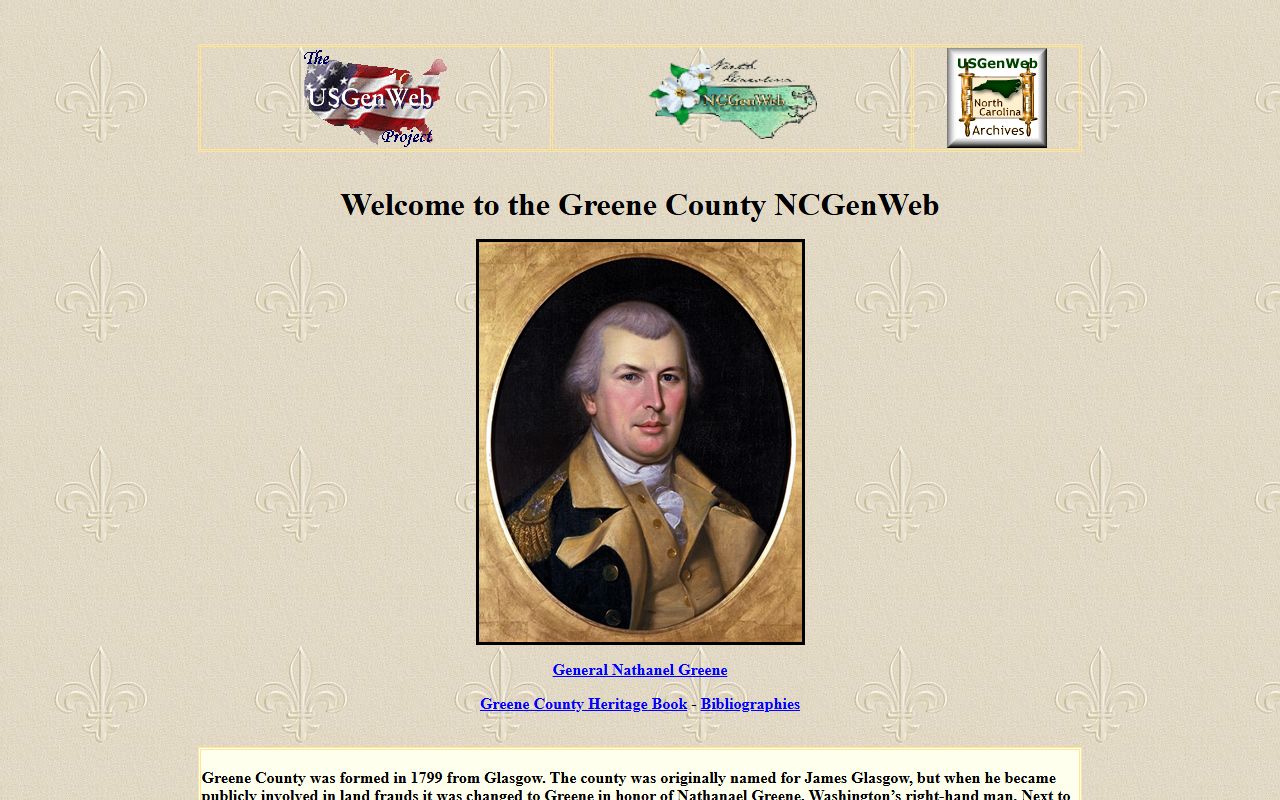
The NCGenWeb page shown above covers Greene County's historical records and is especially helpful for anyone researching dissolution of marriage cases from the 1800s and early 1900s in Snow Hill and surrounding communities.
Note: Greene County records go back to 1800. State vital records certificates only cover divorces from 1958 forward. For older cases, contact the Greene County Clerk in Snow Hill.
Filing for Dissolution Of Marriage in Greene County
To file for dissolution of marriage in Greene County, you go to the Clerk of Superior Court in Snow Hill and submit a complaint for absolute divorce. The filing fee is $225. Under N.C.G.S. § 50-8, at least one spouse must have been a resident of North Carolina for six months before the case is filed. You file in the county where either spouse lives. If you live in Greene County, you file in Snow Hill.
North Carolina requires one year of separation before a dissolution of marriage can be granted. Under N.C.G.S. § 50-6, the parties must live in separate homes for a full year with at least one intending the separation to be permanent. After that year is complete, you file in Greene County and serve your spouse. The clerk in Snow Hill assigns a case number, and all documents in the case become part of the permanent court record. For uncontested cases, the process can move along quickly once the paperwork is in order.
The NC courts help page on separation and divorce provides clear guidance on the dissolution of marriage process in North Carolina, including forms and step-by-step instructions that apply in Greene County.
Greene County Dissolution Of Marriage Record Contents
A dissolution of marriage file in Greene County contains the complaint, the summons, proof of service showing the other spouse was notified, any answer filed in response, and the final judgment. The final judgment of dissolution of marriage officially ends the marriage. Certified copies of this judgment are often needed for legal matters such as name changes, deed transfers, and other post-divorce steps.
Greene County dissolution of marriage records are open to the public under North Carolina law. You do not have to be a party to the case to request access. The Clerk of Superior Court in Snow Hill can provide both certified and plain copies. Certified copies are required for most official uses and carry the court's seal. For divorces from 1958 forward, the NC Vital Records office also maintains state-level divorce certificates, though those documents contain less detail than the full case file kept in Snow Hill.
Greene County's records beginning in 1800 and the county's rural character make it a solid example of how small North Carolina counties maintain accessible, well-organized dissolution of marriage records over many generations.
Nearby Counties
Greene County is in the coastal plain of eastern North Carolina. These neighboring counties each have their own Clerk of Superior Court for dissolution of marriage filings. Check your home address to confirm which county handles your case.