
Dissolution Of Marriage Records in Haywood County
Haywood County dissolution of marriage records are held by the Clerk of Superior Court in Waynesville. The courthouse at 215 N Main Street serves the entire county for court filings and record requests. Court records in Haywood County go back to 1808. If you need to search for a past dissolution of marriage case or get copies of a judgment, this guide explains the process and the resources available to you in Haywood County.
Haywood County Quick Facts
Haywood County Clerk of Superior Court
The Clerk of Superior Court in Haywood County maintains all dissolution of marriage records. This office in Waynesville files new complaints, stores case documents, and provides copies to anyone who requests them. Staff can search by party name or case number and assist with both recent and older records.
Haywood County was created on December 15, 1808, from Buncombe County. It was named for John Haywood, who served as State Treasurer of North Carolina. The county seat is Waynesville, located in the Great Smoky Mountains region of western North Carolina. Court and land records in Haywood County date from 1808 and marriage records from the same year. Communities in Haywood County include Waynesville, Canton, Clyde, Maggie Valley, and Lake Junaluska. All dissolution of marriage cases for residents of these areas are filed at the Waynesville courthouse on North Main Street.
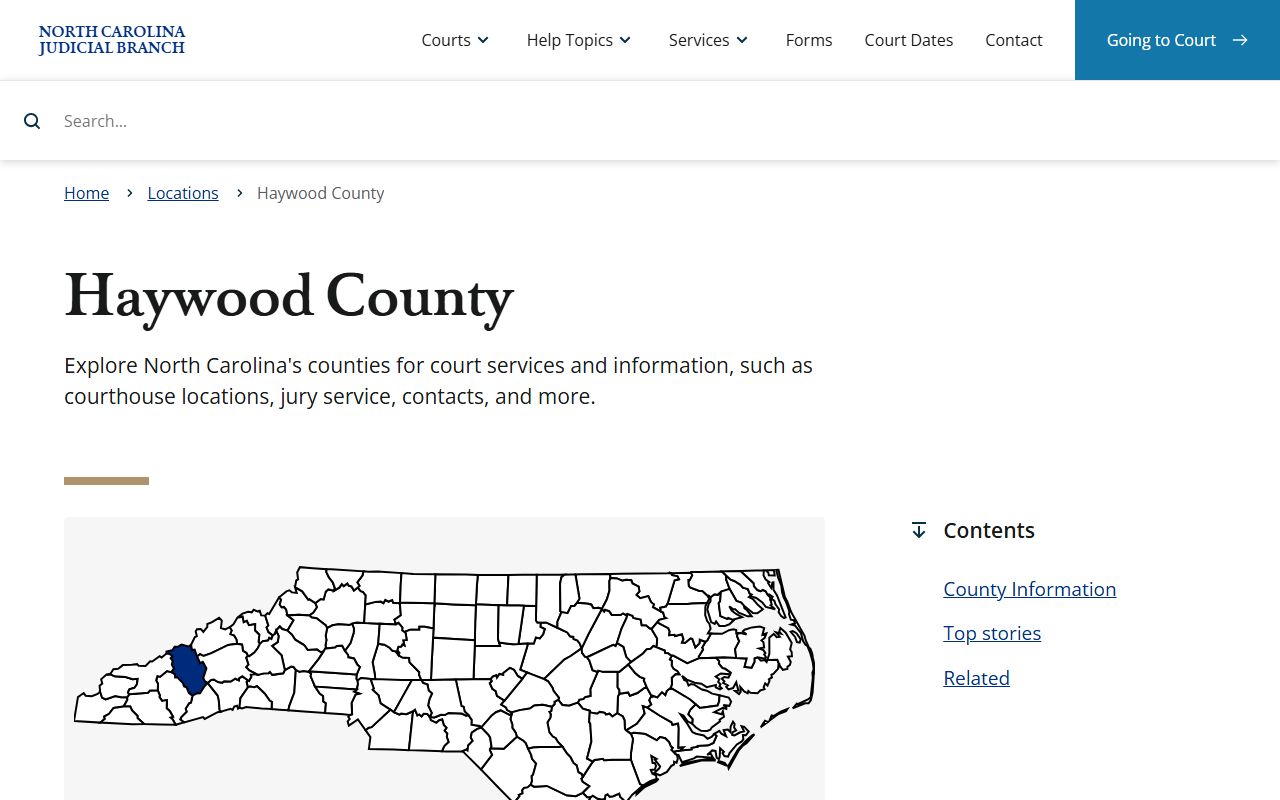
The NC Courts location page for Haywood County shows courthouse hours, contact details, and links to the online case search portal for dissolution of marriage and other civil filings in Waynesville.
| Court |
Haywood County Clerk of Superior Court 215 N Main Street Waynesville, NC 28786 Phone: (828) 452-6600 |
|---|---|
| Hours | Monday through Friday, 8:00 AM to 5:00 PM |
| Website | nccourts.gov/locations/haywood-county |
How to Access Haywood County Dissolution Records
Dissolution of marriage records in Haywood County are public. You can search them through the NC Courts online portal or by visiting the clerk's office in Waynesville. Online access gives you basic case information without a trip to the mountains. In-person access gives you the full file and the ability to get certified copies right away.
The NC Courts page for Haywood County links to the statewide eCourts case search tool. Search by the full name of either spouse or by the assigned case number. Basic case information is available at no charge. Document copies require a request through the Haywood County clerk at (828) 452-6600.
The Haywood County NCGenWeb page is a genealogical resource that can help researchers understand historical court and family records in western North Carolina, including dissolution of marriage cases.
For in-person searches, go to 215 N Main Street in Waynesville with a valid photo ID. Staff can locate cases and make copies. Records in Haywood County go back to 1808. Some older files may require extra time to retrieve. Call ahead to ask about records from specific time periods.
Note: NC Vital Records in Raleigh holds divorce certificates from 1958 forward, but the Haywood County clerk is your source for records before that date or for full case files.
Dissolution Of Marriage Fees in Haywood County
Haywood County follows the North Carolina statewide fee schedule. Filing a dissolution of marriage complaint costs $225. You pay this when you submit the complaint to the clerk in Waynesville. Call (828) 452-6600 to verify the current fee before you file.
Other fees also apply in Haywood County dissolution cases. Service of process on the other spouse adds cost. The Haywood County Sheriff can serve papers, or you may use a private process server or certified mail with return receipt. Copy fees depend on page count. Certified copies of the judgment cost more. If you have limited income, ask the clerk about the Petition to Proceed as an Indigent form for a possible fee waiver in Haywood County.
Filing a Dissolution Of Marriage in Haywood County
The dissolution of marriage process in Haywood County follows North Carolina state law. Each step creates a document that becomes part of the permanent court record at the Waynesville courthouse.
You file a complaint for absolute divorce with the Haywood County Clerk of Superior Court. Under N.C.G.S. 50-8, at least one spouse must have lived in North Carolina for six months before filing. Pay the $225 filing fee when you submit the complaint. The clerk assigns a case number. You must file in the county where you or your spouse resides. Haywood County residents file at the Waynesville courthouse.
Next, you must serve the other spouse with the complaint and summons. Proof of service is filed with the court. Under N.C.G.S. 50-6, the couple must have lived separate and apart for at least one full year before you file for absolute divorce. After all steps are completed and the court holds a hearing, the judge enters a final judgment of dissolution. This judgment is the official public record ending the marriage in Haywood County.
Note: Any claims for property division or alimony must be filed before the final dissolution judgment is entered, or those claims are waived under North Carolina law.
Contents of Haywood County Dissolution Records
A dissolution of marriage file in Haywood County includes all papers filed during the case. The complaint is the first document. It states the grounds and what the filing spouse is seeking. The defendant's answer is filed in response. A separation agreement, if one was made, becomes part of the record. All filed documents are kept at the Haywood County courthouse in Waynesville and are open to the public.
The final judgment of dissolution is the most important document. It legally ends the marriage. Certified copies are often needed for name changes, property transfers, and other legal matters. Get certified copies from the clerk at the Waynesville courthouse. Most requests are filled the same day during normal business hours.
Dissolution of marriage records in Haywood County are public records under North Carolina law. Anyone can view them. You do not need to be a party to the case. Some details about minor children may be protected. The rest of the file is accessible to the public.
Divorce Verification for Haywood County Cases
The NC Vital Records office issues divorce verification letters for divorces granted across North Carolina from 1958 to the present. A verification letter confirms the divorce took place and includes basic identifying information. It is a shorter document than the full court file. Many agencies and offices accept it for administrative purposes.
To get a full dissolution of marriage record from Haywood County, including the complete case file or records before 1958, contact the Clerk of Superior Court in Waynesville. The courthouse holds records going back to 1808. Staff can assist you with the request process and inform you of current copy fees.
Legal Resources in Haywood County
Legal Aid of North Carolina provides free legal help to people with low income in Haywood County. Call the statewide helpline at (866) 219-5262 to ask about family law assistance in the Waynesville area. The North Carolina State Bar lawyer referral service at 1-800-662-7660 can connect you with a family law attorney who handles dissolution of marriage cases near Haywood County.
The NC Courts help page on separation and divorce provides plain-language guides on the requirements for filing and the steps in the process. Court forms are also available to download there. This is a good first stop for anyone considering a dissolution of marriage in Haywood County who wants to understand the process before visiting the courthouse.
Nearby Counties
These counties border Haywood County in western North Carolina. File your dissolution of marriage in the county where you or your spouse lives. The right court depends on your address.