
Johnston County Dissolution Of Marriage Records
Johnston County dissolution of marriage records are filed with the Clerk of Superior Court in Smithfield. The county has kept court records since 1758, making it one of the older record sets in North Carolina. If you need to find a divorce case or get a copy of a judgment, the clerk office in Smithfield is the right place to start. Records are open to the public and can be searched by name or case number. This guide covers how to search Johnston County dissolution of marriage records online and in person.
Johnston County Quick Facts
Johnston County Clerk of Superior Court
The Clerk of Superior Court in Smithfield handles all dissolution of marriage filings in Johnston County. This office is the custodian of divorce cases, court judgments, and case files going back to 1758. Staff can search records by party name or case number. They can also make certified copies of judgments for legal purposes.
Johnston County was formed in 1746 from Craven County and was named for Gabriel Johnston, a Royal Governor of the colony. The county seat of Smithfield has been home to the courthouse for generations. The clerk office serves all towns in Johnston County, from Selma and Benson to Clayton and Four Oaks. All dissolution of marriage cases for Johnston County residents are filed in Smithfield regardless of which town you live in.
The Johnston County court information page lists current contact details and hours for the clerk office.
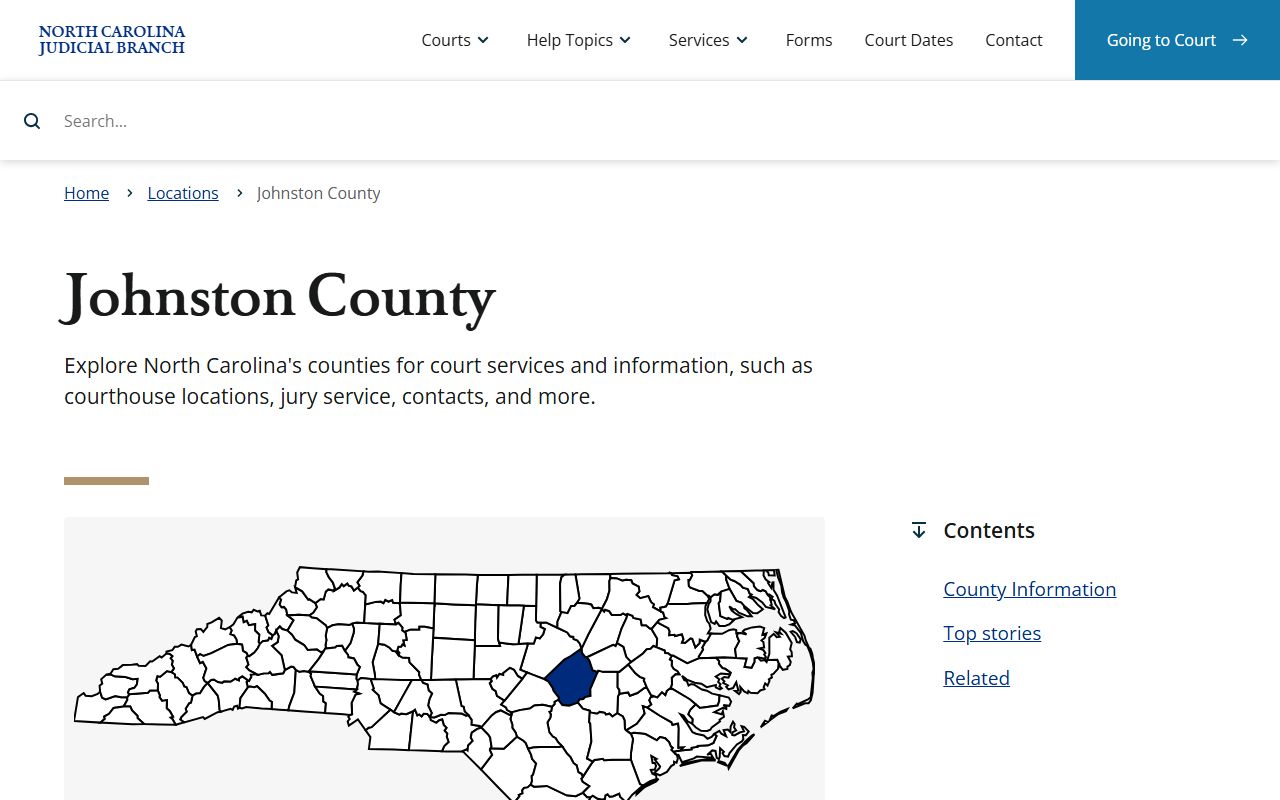
Visiting the clerk office in person gives you direct access to case files and staff who can assist with your search. Bring the full name of one or both parties and, if possible, the year the case was filed. The clerk can also make copies while you wait.
| Court |
Johnston County Clerk of Superior Court PO Box 1049 Smithfield, NC 27577 Phone: (919) 934-3181 |
|---|---|
| Hours | Monday through Friday, 8:00 AM to 5:00 PM |
| Website | nccourts.gov/locations/johnston-county |
How to Find Johnston County Dissolution Of Marriage Records
There are two main ways to search for dissolution of marriage records in Johnston County. You can search online through the North Carolina eCourts system, or you can visit the clerk office in Smithfield in person. Online searches work well if you only need basic case details like the case number, filing date, or party names. For full documents or certified copies, you will need to contact the clerk directly or go in person.
The NC Judicial Branch provides an online portal at nccourts.gov where you can look up civil case records across all North Carolina counties including Johnston. You can search by the name of either spouse. The system is free to use for basic information. It does not include the full text of documents, but it shows case status, filing dates, and assigned judges. This is a good first step when you are not sure if a case was filed or when it was entered.
To get the best results when searching Johnston County dissolution of marriage records, have the following ready:
- Full legal name of one or both spouses at the time of filing
- Approximate year the divorce was filed or granted
- Case number if you already have it
- County name to narrow the search
Note: Dissolution of marriage records in Johnston County from before 1958 are held only at the county clerk office and are not available through the state vital records office.
Johnston County Dissolution Of Marriage Filing Process
Filing for dissolution of marriage in Johnston County begins at the Clerk of Superior Court in Smithfield. You start by submitting a complaint for absolute divorce and paying the required filing fee. The clerk assigns a case number at that time. Every document filed after that becomes part of the permanent court record for Johnston County.
North Carolina law requires that at least one spouse have lived in the state for six months before filing. You must also have lived separately from your spouse for at least one year and one day before filing for absolute divorce. These requirements are set out under N.C.G.S. § 50-6 and N.C.G.S. § 50-8. You file in the county where either spouse currently lives. Johnston County residents file at the Smithfield courthouse.
Once you file the complaint, you must serve the other spouse with the court papers. You can use the Johnston County Sheriff, a private process server, or certified mail with a return receipt. Proof of service is filed with the court. For cases where both sides agree on the divorce, the process tends to move more quickly. The final judgment ends the marriage and becomes a public record in Johnston County.
Note: Any claim for alimony or property division must be filed before the divorce judgment is entered or those rights may be lost under North Carolina law.
What Johnston County Divorce Records Include
A dissolution of marriage case file in Johnston County can include many documents. The complaint is the first paper filed and states the grounds for divorce. The answer is the response from the other spouse, if one is filed. A separation agreement may also be in the file if the parties drafted one before going to court.
The final judgment of absolute divorce is the document most people need. It is the official court order that dissolves the marriage. This judgment is often needed when changing your name, selling property, or remarrying. You can get a certified copy from the Clerk of Superior Court in Smithfield. Certified copies carry the court seal and are accepted as legal proof of the divorce.
Johnston County dissolution of marriage records are public under the North Carolina Public Records Act. Anyone may request them. You do not have to be a party to the case. Some details involving minor children may be redacted or sealed, but most of the file is open to the public. The clerk can tell you what is available when you call or visit the office in Smithfield.
North Carolina Vital Records and Johnston County Divorces
The North Carolina Division of Public Health issues divorce verification letters for divorces granted from 1958 to the present. A verification letter confirms that a dissolution of marriage took place and includes the names of the parties, the date, and the county. This is a shorter document than a full court judgment. Many people use it when a certified copy of the full case file is not needed.
You can order a verification letter through vitalrecords.nc.gov. The fee is $24 for a standard search, which covers one copy if a record is found. Mail requests go to NC Vital Records, 1903 Mail Service Center, Raleigh, NC 27699-1903. Processing times can run several months due to high demand, so plan ahead if you need this type of record from Johnston County.
For divorces that took place before 1958, only the Johnston County Clerk of Superior Court has the records. The state vital records office does not hold pre-1958 dissolution of marriage records. For genealogy research on older cases, the Johnston County clerk office and the North Carolina State Archives may both have helpful materials.
Note: If you need the full terms of a settlement or the complete case file, request the record from the Johnston County clerk, not the state vital records office.
Legal Resources for Johnston County Residents
Several sources of help are available if you are navigating a dissolution of marriage in Johnston County. The NC Judicial Branch website at nccourts.gov has self-help guides, forms, and instructions for people who are not using an attorney. These materials explain each step of the process in plain language.
Legal Aid of North Carolina provides free legal help to qualifying individuals. Their statewide helpline is (866) 219-5262. The North Carolina State Bar can refer you to a family law attorney through its lawyer referral service at 1-800-662-7660. An attorney who handles dissolution of marriage cases in Johnston County can advise you on property, custody, and support issues that are separate from the divorce itself.
Other Johnston County Records
The Johnston County Register of Deeds holds marriage licenses going back to 1763 and land records from 1746. If you need proof of the marriage before a dissolution of marriage, the register of deeds is the right office. Property records often change after a divorce, and deeds for Johnston County are also held by that office.
Johnston County probate records go back to 1746 at the Clerk of Superior Court. These can matter when a divorce intersects with estate planning or inheritance. The clerk office in Smithfield handles both divorce and probate filings. If you have questions about related court matters in Johnston County, call the clerk at (919) 934-3181.
Nearby Counties
These counties border Johnston County. Each county files dissolution of marriage cases at its own Clerk of Superior Court. If you are not sure which county handles your case, check the address where you or your spouse lives.