
Stokes County Dissolution Of Marriage Records
Stokes County dissolution of marriage records are held by the Clerk of Superior Court in Danbury. The clerk maintains all case filings, documents, and final judgments for dissolution of marriage cases in Stokes County. You can search for records online through the North Carolina courts system or visit the clerk's office in person. This page walks you through what you need to find Stokes County dissolution of marriage records and how to request copies when you need them.
Stokes County Quick Facts
Stokes County Clerk of Superior Court
The Clerk of Superior Court in Stokes County manages the official record for all dissolution of marriage cases filed in Danbury. The office accepts new filings, stores all case papers, and issues certified copies of judgments and other court documents. Staff can help you search for a dissolution of marriage case by name or case number in the Stokes County system.
Stokes County was formed in 1789 from Surry County and named for John Stokes, a Revolutionary War soldier and early federal judge. Court records in Stokes County date to 1789. The courthouse serves residents from across the county, including communities in King, Walnut Cove, Danbury, Germanton, and surrounding rural areas. All dissolution of marriage cases for Stokes County residents are filed and stored with the clerk in Danbury.
Visit the Stokes County Court Information page at nccourts.gov for the most current hours, phone numbers, and access to the online case search tools for Stokes County dissolution of marriage records.
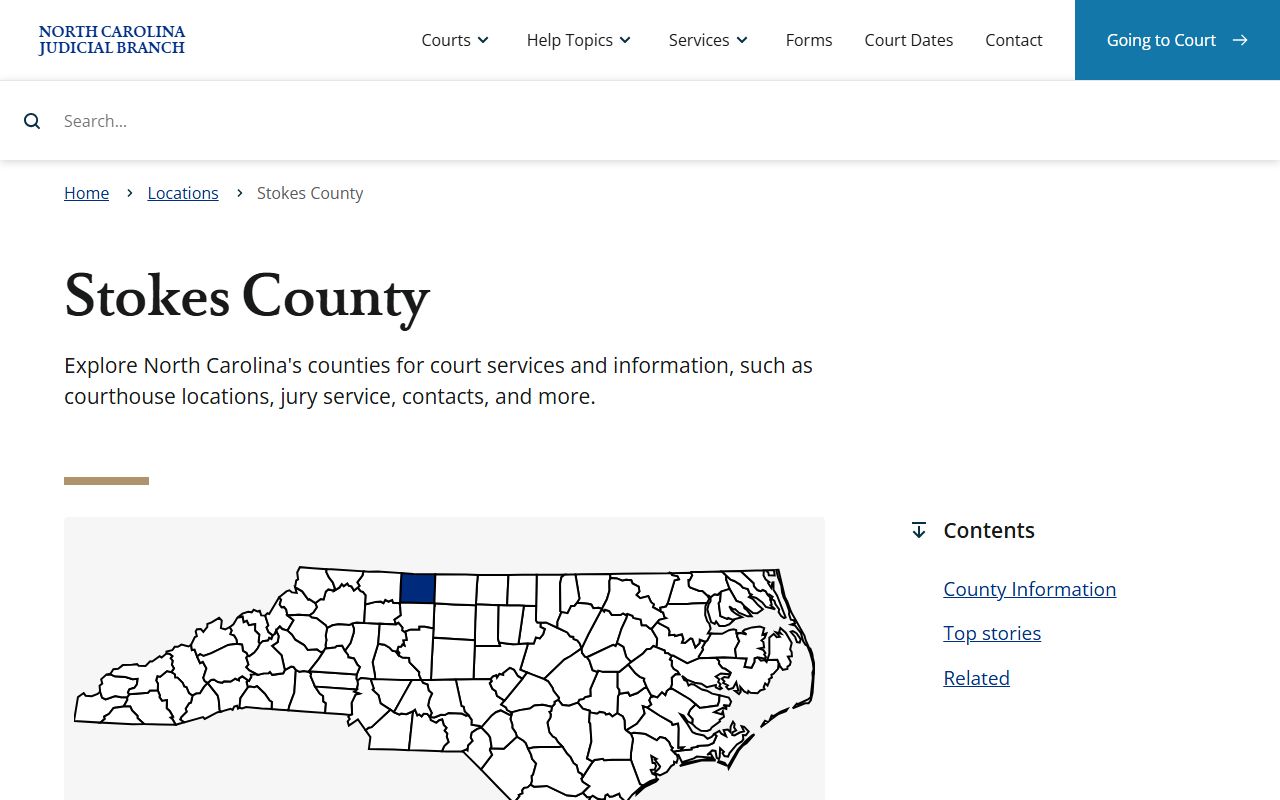
The court information page for Stokes County connects you to online lookup tools and current contact details for the Danbury courthouse.
| Court |
Stokes County Clerk of Superior Court PO Box 217 Danbury, NC 27016 Phone: 336-593-2811 |
|---|---|
| Hours | Monday through Friday, 8:00 AM to 5:00 PM |
| Website | nccourts.gov/locations/stokes-county |
Searching Stokes County Dissolution Of Marriage Records
Online access to Stokes County dissolution of marriage records is available through the North Carolina eCourts portal at nccourts.gov. You can search civil case records by party name or case number at no cost. Basic details such as filing date, case status, and party names are available online. For full documents or certified copies, contact the Stokes County clerk directly.
An in-person visit to the Stokes County courthouse in Danbury gives you the most direct access to dissolution of marriage case files. Bring the full name of at least one party and an estimate of when the case was filed. The clerk can search by name. Older records may take more time to locate and retrieve. Call 336-593-2811 before you visit to ask about current office procedures and any identification requirements.
Historical dissolution of marriage records in Stokes County date back to 1789. The Stokes County NCGenWeb page offers research guides and indexes that can help with older court record searches in Danbury and across Stokes County.
Note: Stokes County is a smaller, more rural county, so contacting the clerk by phone before visiting can save you time and confirm current wait times for record requests.
Dissolution Of Marriage Filing Process in Stokes County
The filing process for a dissolution of marriage in Stokes County begins at the clerk's office in Danbury. You file a complaint for absolute divorce and pay the $225 filing fee. The clerk assigns a case number and the filing becomes part of the public record in Stokes County.
Before you can file, North Carolina law requires a one-year separation. Under N.C.G.S. § 50-6, you and your spouse must have lived in separate homes for at least one year, with at least one person intending the separation to be permanent. Under N.C.G.S. § 50-8, one spouse must have lived in North Carolina for at least six months before you file. Stokes County residents file at the Danbury courthouse.
Once the complaint is filed, you must serve the other spouse. You can use the Stokes County Sheriff, a private server, or certified mail with return receipt. Proof of service becomes part of the case file. For uncontested cases where both sides agree, the court can enter the final judgment of absolute divorce relatively quickly after all procedural steps are complete. The final judgment is the official record of the dissolution of marriage in Stokes County.
Note: Property division and spousal support claims must be filed before the dissolution judgment is entered in Stokes County, or they are lost under North Carolina law.
What Stokes County Dissolution Of Marriage Records Contain
A dissolution of marriage file in Stokes County holds the complaint, any answer from the other spouse, service documents, and the final judgment. A written separation agreement, if one was signed, may also be included. All of these are kept by the Stokes County Clerk of Superior Court in Danbury.
The final judgment of absolute divorce is the primary document most people need from the Stokes County records. This order formally ends the marriage. Certified copies are used for legal tasks such as changing a name on a license, updating a passport, or completing a real estate transfer tied to the dissolution of marriage in Stokes County. The clerk in Danbury issues certified copies for a fee.
Stokes County dissolution of marriage records are public records under N.C.G.S. Chapter 132. Anyone can view or request them without being a party to the case. Portions involving minor children may be restricted, but the main documents in the file are open to the public.
Items typically found in a Stokes County dissolution of marriage file include:
- Full names of both spouses
- Date of marriage and date of separation
- Date the case was filed in Stokes County
- Date the court entered the final judgment
- Name restoration if ordered by the court
- Any other orders made during the case
Stokes County Dissolution Of Marriage Certificates
North Carolina Vital Records holds divorce certificates for dissolutions that occurred from 1958 to the present. A state certificate confirms the dissolution happened but does not include the full case record. Visit vitalrecords.nc.gov to request one. The fee is $24 for a standard search covering one three-year period, including one copy if a record is found. Current processing times are several months, so plan ahead if you need this document by a deadline.
For the full Stokes County dissolution of marriage record, including all case documents and the certified judgment, contact the Clerk of Superior Court in Danbury. Dissolutions before 1958 are not held by the state. Those older records are at the county level only. Call 336-593-2811 to inquire about requesting records from earlier periods.
Legal Help in Stokes County for Dissolution Cases
Legal Aid of North Carolina provides free legal help to qualifying low-income residents, including those in Stokes County. Call (866) 219-5262 to see if you qualify for assistance with your dissolution of marriage case. The North Carolina State Bar's lawyer referral service at 1-800-662-7660 can connect you with a family law attorney serving the Danbury area and Stokes County.
Official court forms for filing a dissolution of marriage in Stokes County are available through the NC Judicial Branch at nccourts.gov. The site also explains the full process in plain language, including what happens if the other spouse does not respond after being served in a Stokes County dissolution case.
Related Records in Stokes County
The Stokes County Register of Deeds holds marriage records going back to 1789. These records are often needed as evidence of the marriage in a dissolution of marriage case. The Register of Deeds also holds property deeds and land records that may be involved in a dissolution settlement in Stokes County. Both offices are located in Danbury.
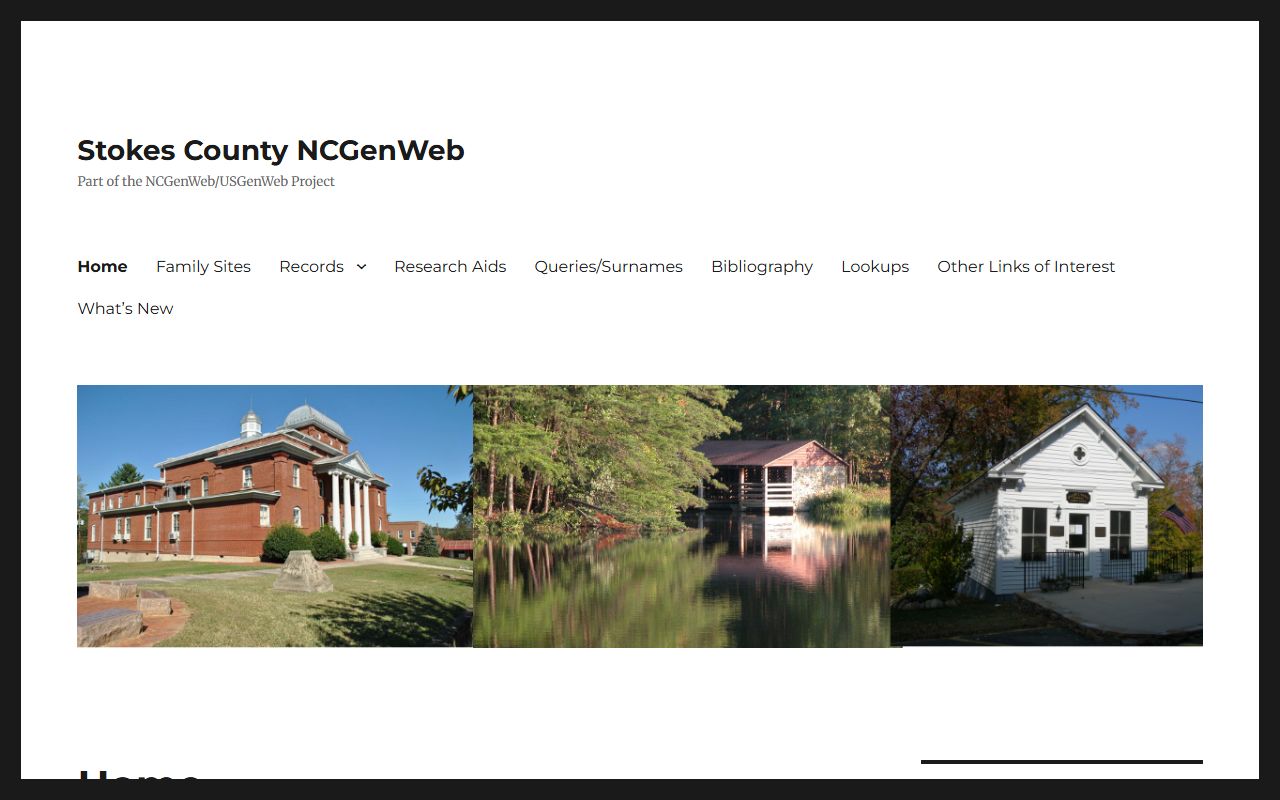
The NCGenWeb page for Stokes County provides genealogy resources and court record indexes for historical dissolution of marriage research in Danbury and across Stokes County going back to 1789.
Nearby Counties
These counties are adjacent to Stokes County. File your dissolution of marriage case in the county where you or your spouse resides. Using the correct county is required for the court to have jurisdiction over your case.